10,000 drivers caught using mobiles despite points threat

posted under by sangeet
A STAGGERING 10,000 motorists have been caught using their mobile phone while driving since it became a penalty point offence just over six months ago.

Garda figures show more than 400 drivers a week are nabbed talking or texting on their phone.

But despite the huge numbers being caught in the act, pictures taken by the Irish Independent show that drivers continue to flagrantly disregard the new law.

The photographs, taken at various locations across Dublin city centre, show that some motorists have no qualms about negotiating junctions and traffic lights one-handed, while distracted by a phone conversation.

The most recent figures from the Department of Transport reveal that up until the end of February 5,427 notices were issued to drivers in relation to mobile phones.

However, there is a time-lag between motorists being caught by gardai and notices being issued. As many as 10,000 drivers, therefore, can expect notices in the post over the coming weeks.

According to road safety campaigners, the figures show that the penny has yet to drop for many motorists. "It's an almost universal practice," said AA spokesman Conor Faughnan.

"We all know we shouldn't be doing it but there seems to be something in the human psychology that makes it very hard to resist a ringing phone.

"But there is no such thing as a phone call that is so important you have to take it," he said.

Brian Farrell, of the Road Safety Authority, said: "You are four times more likely to be involved in a crash when using a hand-held mobile phone. It's just common sense that you can't do two things at the one time."

"I suppose what we are seeing now is the result of increased garda enforcement activity in this area . . . people need to be aware that the penalty point system is fully operational and, from the garda numbers, enforcement has been very effective," he said.

Drivers caught using mobile phones have the option of paying a fixed charge of €60 and incur two penalty points instead of being prosecuted in court. A motorist who challenges the fine in court and is convicted faces four penalty points and a fine of up to €2,000.

Study points to tumour risk from older mobiles

posted under by sangeet
Research suggests that using a mobile phone for 10 years or more might increase the risk of a non-cancerous tumour which can affect hearing.

The risk applies only to the ear to which users hold their mobiles, suggests a study by the Karolinska Institute in Stockholm, one of 13 in an EU-funded programme. The first to be published, from Denmark, suggested no association between mobile use and acoustic neuroma. All 13 will be pooled to draw conclusions.

The risk of acoustic neuroma, a tumour on the nerve linking ear and brain, increased nearly four times, the Swedish researchers concluded from nearly 150 patients and 600 others without the condition. Symptoms usually develop slowly into possible hearing loss, buzzing noises, headache, pain, dizziness, and loss of balance.

The tumour can usually be removed by surgery, though facial nerves may be damaged if it is large.

In 2000, a British report commissioned by the government found no evidence of harm. But the team said more research was needed, and recommended advising children against frequent use.

The Swedish study, published in the journal Epidemiology, stressed that it ran from 1999 to 2002, when only older analogue mobiles had been in use for more than 10 years; digital technology emits less electromagnetic radiation.

One researcher, Anders Albohm, told Associated Press more research was needed. "You could say also, if someone is concerned, the easy way to avoid any risk is to use a hands-free set."

The Mobile Operators Association said it took safety very seriously: "Individual studies must be seen in the light of the total research effort into mobile phone safety. There have been other recent studies that have failed to show any link between mobiles and tumours."


How To Walk, Talk & Charge Your Mobile Phone

posted under by sangeet
Everyday activities — commuting to work, walking the dog, grocery shopping — could one day help keep your cell phone charged, thanks to an emerging technology that converts regular motion into power.

Boise, Idaho-based startup M2E Power announced this week it will start selling a cell-phone charger next year that can convert six hours of everyday movement (about two days of toting it around) into one hour of talk time. The company hopes to one day embed its microgenerator and a battery storage system into the cell phone itself. While motion-harvesting mobiles might not become a blockbuster hit in industrialized nations, they could fill a real need in developing nations where the power grid is woefully lacking.

Cell phones are sweeping the developing world, as the technology becomes cheap and can offer an otherwise hard-to-come-by data connection. At the beginning of the year there were a quarter of a billion cell-phone subscribers in Africa alone, according to the International Telecommunications Union. In India there are about 300 million cell-phone subscribers to date, and China has more than 550 million subscribers. As research firm Gartner notes in a recent report, the growth of the mobile phone industry “will increasingly rely on emerging markets as mature regions, such as Western Europe, Japan and North America reach saturation.”

These countries also have electrical grids that are woefully fractured, inadequate or, when actually available, intermittent. Being able to generate, store and use non-grid power to juice up a cell phone could be extremely valuable in these markets. According to the International Energy Agency and the World Bank there are roughly 1.6 billion people without access to modern electricity grids, most of them in Southeast Asia, Sub-Saharan Africa and East Asia. If motion power could give mobile phone users longer times between charging, it could be a highly sought-after feature.


In developed markets, phone makers are striving to “out-green” each other as a way to stand out from the crowd and command premium prices for their gadgets. M2E’s charger, which will sell for $20 to $40, can reduce the need to charge from the grid and thus cut down on electricity and related carbon emissions. (External power supplies, including battery chargers, make up 3 to 4 percent of U.S. electricity use, according to Ecos Consulting.) And the trend of using renewable energy to power cell phones is just starting. Solar chargers, like Solio, can power an hour of talk time with about 2.5 hours of direct sunlight.

Thus far, cell-phone companies haven’t made any moves toward adopting the technology, but they say they’re reviewing it. The world’s largest handset maker, Nokia, has been grabbing market share from competitors — selling 122 million cell phones, about one-fourth of the global total, in the second quarter — because of its success in developing nations. Its sales in Latin America and Asia-Pacific increased about 40 percent over second quarter last year. A spokesperson says Nokia is “keeping an eye out for” a variety of cleaner charging options — including power generated by human movement — that could be used in Nokia products.

Motorola sees a potential market for the battery-extending technology among users “with active lifestyles.” A spokesperson said Motorola views motion-harvesting as a viable external power source in the short term, and noted that it could become an integrated solution in the longer term, as power generation becomes an important design issue.

M2E hasn’t yet named a manufacturing partner for its charger, but the company says it is in discussions with the accessories divisions of major cell-phone companies. M2E Power’s Business Development Director Regan Rowe acknowledges that cell-phone companies see an early-adopter risk in embedding the technology on the phones themselves, so the external charger has been the company’s first step to commercialization.

Ultimately, the determining factor in whether motion-harvesting technology makes it into mass-market cell phones and accessories will be cost. How much will it cost to add the technology to phones, and how much is the user willing to pay? If the price tag remains high, the technology could end up as a pricey feature on a high-end green phone, rather than solving energy (and digital access) issues in the developing world. But if the cost comes down enough, it could be a real game-changer for cell phones with sporadic or no access to the power grid.

The Phone team says "Hello?"

posted under by sangeet

I'd like to share a great photo of the Windows Mobile Phone team enjoying a much needed day off. These guys (and gals) are responsible for Smart Dial, Call History, Speed Dial, Call Progress, Voicemail, Wireless Manager and a whole bunch of phone UI and APIs. They're all hard at work on building a great phone + connectivity experience for the next version of Windows Mobile. (The smiles on their faces are probably indicative of some great new features they've just wrapped up).

Introducing the team from L-R:


JJ (test), Arturo (test), Darin (dev), Kerry (PM), Robert (dev lead), Howard (dev), Ritu (dev), Kelly (test), Thairu (dev).

So there you have it, folks - your typical Microsoft feature team consisting of dev, test and PM on a hot summer day. I'll try and post pictures of other teams bringing you Windows Mobile. In the mean time, feel free to share comments with the team but please keep it courteous.


NeedEarn.com affiliate program

EARN MONEY FROM YOUR WEBSITE


Turn your valuable web site traffic into money. Join our affiliate program.
We offer the most pay-per-click rate to help maximize your revenue stream.


Imagine running of a something that never failed to provide you with cash-flow.
A never ending income generator, a system so amazingly profitable that you never had to work for a boss ever again!


0 (ZERO) INVESTMENT PROGRAM


We designed this system specifically for NO COST methods, to make thousands, if not millions of dollars, without spending money.

Join our money making program absolutely free and 100% risk free.


Sign Up...

Income while you sleep

INCOME WHILE YOU SLEEP


Earn $1,000... $2,000... $5,000...


Turn your site traffic into cash!


You get paid for every visitor that clicks on our advertizing. Our goal is to enable you to make as
much as possible from your advertising space. We pay monthly, either by check, or instantly through PayPal.


Our program enables you to generate a steady stream of income, 24 hours a day, 7 days a week,
365 days a year. Allowing you more time to focus on the things you love.


You'll even be making money while your sleep!


Sign Up...

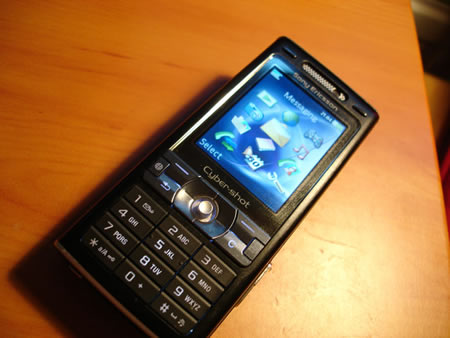
Sony Ericsson K800i Review

posted under by sangeet

Sony Ericsson K800i review
The following Sony Ericsson K800i review is a little different from other mobile phone reviews across the Web (and certainly different from other reviews we've done here at MobileMentalism). It's a long-term review, showing what the Sony Ericsson K800i has been like to use over the course of six months.

The K800i is a very capable camera phone, being part of Sony Ericsson's CyberShot range, and is now available at extremely attractive prices. To see whether the phone is for you or not, hit the link to read our full long-term Sony Ericsson K800i review.

Why the MOTOZINE ZN5 will not save Motorola

posted under by sangeet

Motorola MOTOZINE ZN5 camera phone
After over a year of rumours, leaked pictures and speculation, Motorola have finally announced the 5 megapixel camera phone they've been working on with Kodak. Called the Motorola MOTOZINE ZN5, the new camera phone was seen as a key element in Motorola's fight-back against its competitors, which have been eating up its market share for over a year now.

Is it too little too late, though? Given that most of the other manufacturers have had 5 megapixel camera phones on the market for over a year now, and Sony Ericsson are about to launch an 8 megapixel camera phone, can Motorola's first 5 megapixel camera phone really help the company stem its losses and help it regain the technological lead it once held?

Read on after the jump to find out.

What vibrating mobile phones were always meant for

posted under by sangeet

You're Swedish, you're bored, and all you have to occupy yourself are a vibrating mobile phone, a condom, some lube...and an idea.

Yes, unlike countless millions of teens across the globe who would perhaps come up with a slightly different idea, these Swedes decided that the best thing to do with such apparatus was to have a race between their be-sheathed mobile phones. Not entirely sure I want to know what the winner received!

As if that wasn't bad enough though, they also devised a sailing contest, rigging up their phones with a splendid looking sail. If you think I'm mad, just check out the vids after the jump (and I apologise now for the extremely bad Swedish renditions of Rod Stewart's "We are sailing"!)

top